

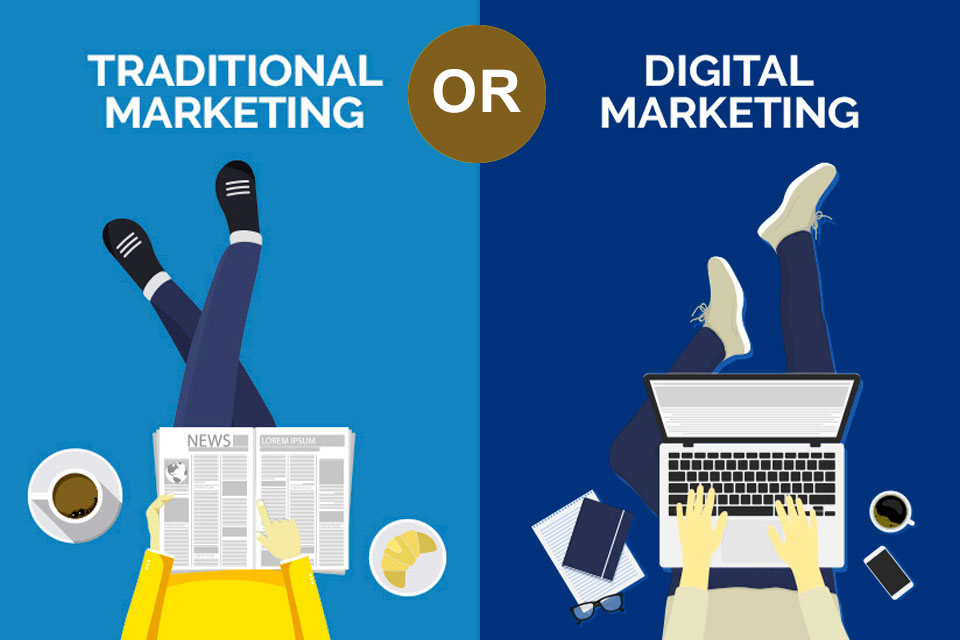
In today’s fast-evolving business world, choosing the right marketing strategy can make or break your brand. Businesses often face the dilemma of investing in traditional marketing or digital marketing. Both approaches have unique advantages, and understanding their differences is crucial to deciding what works best for your brand.
Traditional Marketing: The Tried and Tested Approach
Traditional marketing refers to conventional methods like print advertisements, television and radio commercials, billboards, flyers, and direct mail. It has been the backbone of business promotion for decades and works well for brands targeting local audiences or specific demographics. Traditional marketing offers tangible results and builds credibility because it often reaches people in their everyday environment.
However, it comes with limitations. Measuring effectiveness can be challenging, and the cost of advertising campaigns — such as TV or print ads — is often high. Additionally, traditional marketing lacks the flexibility to adapt quickly to changing market trends or audience behavior.
Digital Marketing: The Modern, Data-Driven Approach
Digital marketing leverages online channels to promote products and services, including social media, search engines, email marketing, content marketing, and paid online ads. It allows brands to reach a global audience and track performance in real time. One of the biggest advantages of digital marketing is its cost-effectiveness. Even small businesses can achieve significant results with targeted campaigns and measurable analytics.
Digital marketing also offers precise targeting, personalization, and engagement opportunities. Brands can interact directly with customers through social media, chatbots, and email campaigns. Furthermore, with trends like SEO optimization, influencer marketing, and AI-driven advertising, businesses can stay competitive and adapt strategies quickly.
Which Approach Is Right for Your Brand?
The choice between traditional and digital marketing depends on your business goals, target audience, and budget. Traditional marketing is ideal for local outreach, brand awareness, and audiences that engage more with offline channels. Digital marketing is perfect for brands seeking measurable results, global reach, and interactive engagement.
Many successful businesses combine both approaches, creating a hybrid strategy that leverages the strengths of each. For example, a retail store might use a local newspaper ad to attract nearby customers while running social media campaigns to engage a broader audience online.
There’s no one-size-fits-all answer when choosing between traditional and digital marketing. Understanding your brand’s objectives, audience behavior, and budget will help you select the strategy that delivers the best ROI. For most modern businesses, integrating both approaches often provides the ideal balance — combining the credibility of traditional marketing with the precision and adaptability of digital marketing.